Olympic Records That Will Not Be Broken Anytime Soon
The Olympic records can be considered the most perfect aspect ever achieved by man, where athletic feats are taken to the extreme. Man has spent years, even decades, trying to outdo such records that appear nearly impossible.
Such records give future generations something to aspire to, and in order to surpass such records, numerous years of training are likely to be needed, which is why the Olympics are forever in a hunt for perfection.
The Concept of Olympic Records
Olympic records are not only statistics. They are an epistolary of victory, struggle, and sometimes the impossible. It is an athlete’s wish to excel above the present record, which in every respect was no small achievement.
For instance, the astonishing long jump record set by Robert Beamon in 1968 was so phenomenal that it was best described as the ‘jump of the century. Also, breaking any Olympic achievement is as exciting as winning in an online betting app Bangladesh, where people’s hearts are racing every second.
Such records are more than just accomplishments. They explain the human aspect of these achievements by wanting to go beyond all limits.
They serve to remind the onlookers that if the right amounts of skill, practice, and will are gathered, the ‘impossible’ can be reimagined. The interest in these records remains in both sportsmen and fans, with the sport providing upper limits in terms of what can be achieved in the global arena.

Advances in Training and Technology
Advancements in technology, as well as training resources, have contributed significantly to the improvement of Olympic records. Major developments include:
- Improved Nutrition: Nutrition plans that enhance performance and recovery.
- High-Tech Equipment: New generation devices such as aerodynamic suits and lightweight shoes.
- Data-Driven Training: Adaptation of analytics and modeling to enhance skills.
This growth in science and technology has made it possible for athletes to perform at levels that can be viewed as impossible. This is how the Olympic records will continue to be challenged and broken.
Ceremonial Great Competition Record
Olympic records of some performances are so great that one cannot imagine a way to replace them. These performances have shaped the history of the Games while bringing out the best in humankind.
Two athletes, in particular, have made some records that keep transforming the world with wonder and amazement. We shall examine these amazing acts in detail.
Usain Bolt, Sprinting Records
Usain Bolt is the fastest human being known in history after clocking the 100 meters (9.58 seconds) and 200 meters (19.19 seconds), which are world records still not broken to date. Apart from being charismatic, Bolt’s speed wowed the world, especially during the 2008 and 2012 Olympics.
His high and active standing on the track earned him respect, and his performances are relevant even to today’s sports lovers.
If you want to stay updated on all the latest sports news, MelBet offers real-time updates that keep you in the loop. So we advise you to subscribe to this page so as not to miss any news from the world of sports!
Most Olympic Medals by Michael Phelps
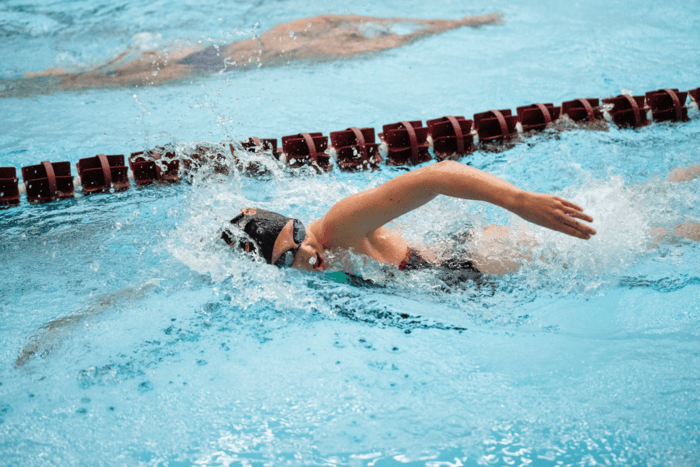
As of now, he has the highest number of Olympic medals won by any player, which is 28, with a gold medal count of 23 across different events, painting the competition. Over the years from 2004 to 2016, Phelps’ swimming Olympic record has seen a lot of exceptional glory.
The instance of Phelps being able to perform well in numerous events across the fiercest of sports disciplines, swimming, for four straight Olympics, is unparalleled. What he has makes one—words cannot describe—talent, commitment, tenacity, and a thirst for greatness.
Challenges to Breaking These Records
For some reason, breaking some Olympic records becomes very difficult as such achievements are bounded within certain parameters and cannot be broken. These challenges include:
- Peak Human Performance: Athletes such as Usain Bolt and Michael Phelps brought a new meaning to the phrase “what is humanly possible.”
- Technological Limits: Current gear and technology have already been optimized to their limits, where there is little or no room for improvement.
- Psychological Pressure: The willingness to deliver on the biggest global stage comes with a mental burden that most competitors carry, adding a little more difficulty.
Because of these factors, it is crystal clear why certain records will remain standing for decades or even hundreds of years, out of reach for most athletes.
Role of Sports Science in Records
The application of exercise science has had the effect that Olympic records are continually being surpassed and new ones created. The potential for sports scientists to help athletes achieve the impossible has been realized by studying every definition of what being an athlete entails, including biomechanics and nutrition.
Advanced training methods, recovery techniques, and advanced data collection and analysis have all been important in enabling the amazing things that happen in the Olympics.
Inasmuch as there have been all these advancements, there are things that still look insurmountable in the record books, mostly like the ones belonging to Bolt and that of Phelps. This tells you that even science has its limitations toward the extent of human ability.
Future Prospects
What lies ahead is that the pursuit of Olympic records will still push the creation of new technologies and advancements in training as well as the human will. Nevertheless, a few records may stand the test of time, remaining exemplary monuments for the entire generation of athletes that bear witness to it.
As long as the Olympics are there, there will always be a convergence of dreams with reality where the impossible becomes possible, and every new record endorsed is a piece of history.